The real-life decision
Start with the day, not the product page.
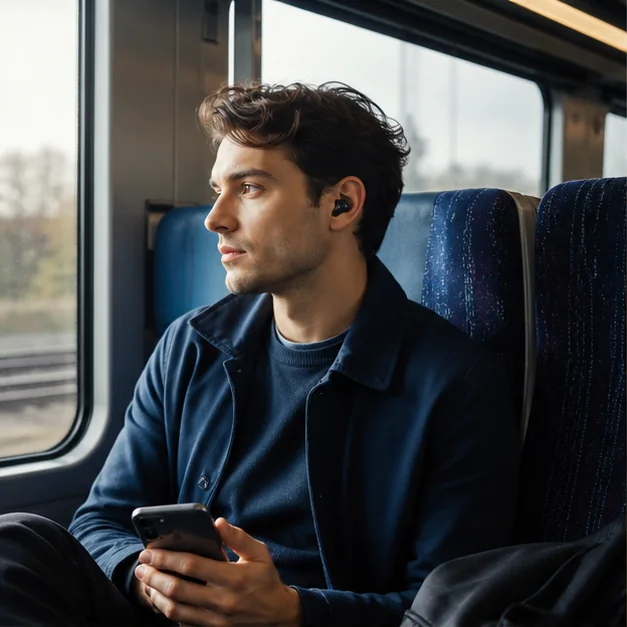
It is 7:42 a.m., the carriage is crowded, and one hand is holding a coffee while the other reaches for a rail. The right earbuds disappear into this routine; the wrong pair turns every announcement and phone call into friction.
Choose secure comfort and predictable controls before chasing the longest feature list. A slightly less dramatic sound profile is often the better daily buy if the earbuds seat quickly and behave reliably. This is the filter we use throughout the guide: the product should reduce friction in the moment it is meant to serve, while creating as little new maintenance as possible.
Regular rail commuters, hybrid workers, and listeners who make short calls on the move.
You mostly listen at a quiet desk or dislike the sealed feeling of in-ear tips.
What to look for
The buying checklist.
Before comparing colors, launch stories, or a long feature list, make these three checks. They turn a broad category into a decision you can explain and repeat.
- 01
A stable fit across at least two tip sizes
Try every included tip size. A secure, comfortable seal affects isolation and bass more than a long list of sound modes. Check the fit while walking and speaking, not only while sitting still.
- 02
Physical or well-tuned touch controls you can use one-handed
Test play, pause, volume, and awareness-mode switching with one hand. Controls that require repeated taps or a phone screen are awkward when you are holding a rail or bag.
- 03
A case that fits the pocket you actually carry
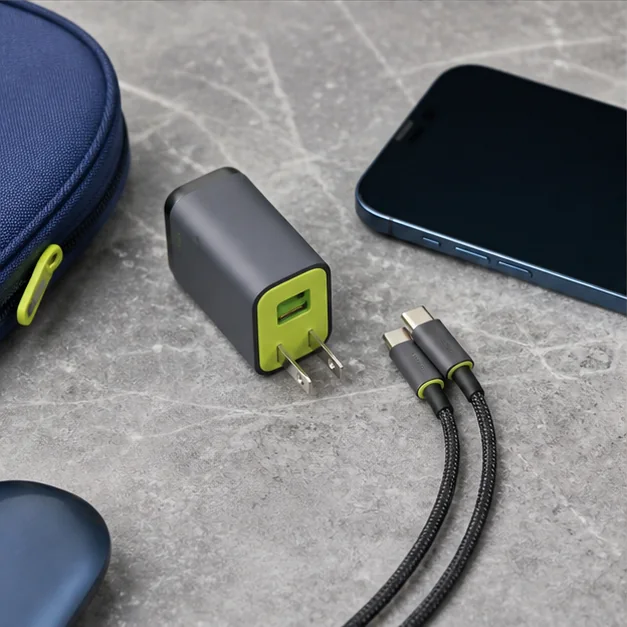
Put the case in the pocket or bag you use on weekdays. Check that the lid opens easily, the earbuds seat without fiddling, and you can tell whether they are charging.
A closer look
A commuter’s five-minute trial
This is a buying check you can do during a return window. It is a suggested method, not a claim that Review Mosaic has tested a particular model.
Try each tip size, then walk around and speak for a few minutes. Notice pressure, slipping, and whether the seal changes when your jaw moves.
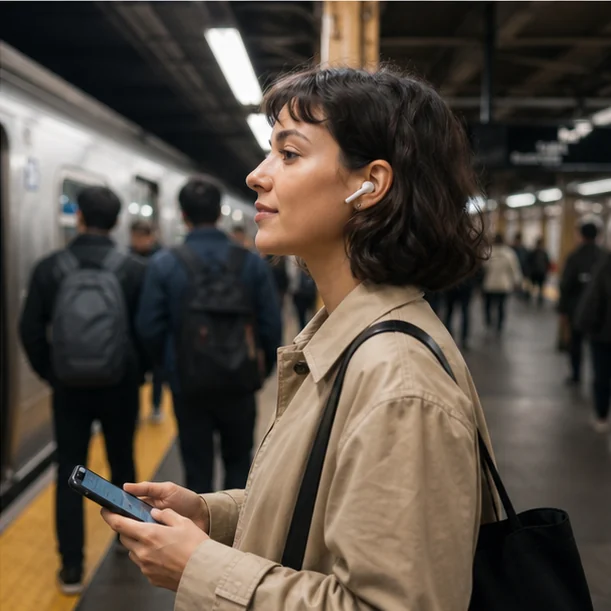
Switch between cancellation and awareness without looking at your phone. Keep announcements and traffic cues audible whenever you need them.
Record a short voice memo in a noisy but safe place and listen back. A call-focused purchase should make your words understandable, not just quiet the background.
Three useful ways to buy
Choose by scenario.
There is no honest single winner for every reader. These routes narrow the category around three different priorities and make the cost of each choice visible.
Best for crowded trains
Prioritize effective low-frequency noise reduction and a secure seal.
The tradeoff: Strong isolation can make platform awareness harder.
Use the checklist ↗Best for calls between stops
Look for consistent microphone processing in changing noise.
The tradeoff: Aggressive processing may make voices sound thin.
Use the checklist ↗Best for all-day comfort
Choose lighter shells and moderate nozzle depth.
The tradeoff: The smallest design may sacrifice battery capacity.
Use the checklist ↗What to avoid
Three shortcuts that create regret.
- Buying from a spec sheet without checking return terms
- Assuming every ear shape works with the included tips
- Using maximum cancellation where awareness matters
Avoiding the wrong purchase is part of a buying guide’s job. If a product cannot answer the checklist above, a discount does not make it a better fit.
Living with the choice
Care is part of the value.
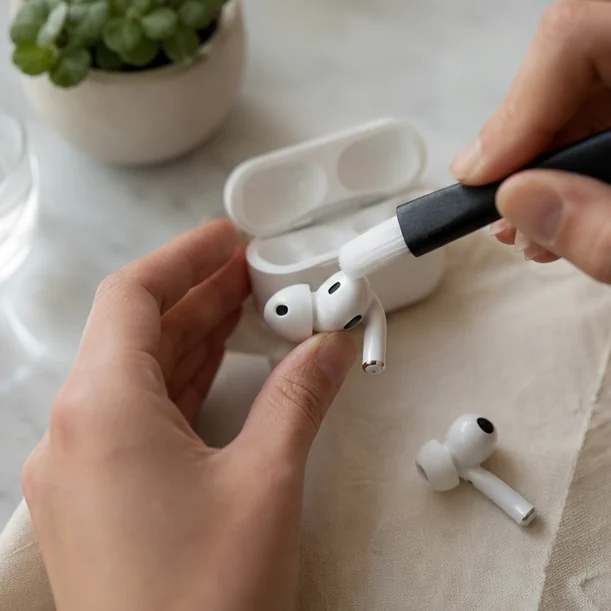
Wipe tips after warm commutes, let moisture dry before closing the case, and replace worn tips before blaming the electronics for a weak seal.
Keep the receipt and care information until the return period has passed. Reassess the product after the first ordinary week—not only the exciting first day—and notice whether it has found a stable place in your routine.
Questions readers ask
Quick answers before you buy.
Does stronger noise cancellation mean I can ignore volume?
No. Cancellation can make lower-volume listening easier, but your playback level still matters. The World Health Organization recommends well-fitted, noise-cancelling headphones to reduce the urge to raise volume in noise.
Should I buy the pair with the longest advertised battery life?
Only after checking fit and controls. Published battery figures depend on settings and test conditions; your short daily trips may be better served by a smaller case you reliably carry.
What if I need to hear announcements?
Choose earbuds with an easy awareness mode or remove one earbud when necessary. Treat platform and street awareness as part of your commute routine.
Sources and further reading
These sources support specific guidance above. Product suitability remains an editorial judgment based on your own routine.