The real-life decision
Start with the day, not the product page.
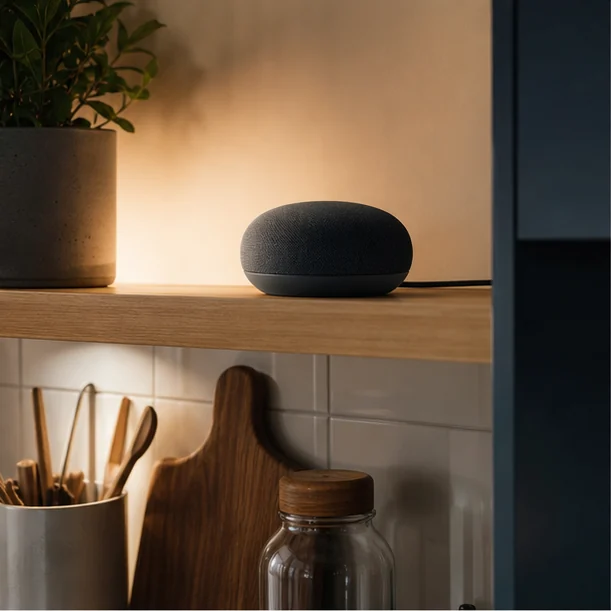
You are cooking with wet hands and want a timer, a podcast, and one light turned down. In a small home, a smart speaker earns space by removing tiny interruptions without becoming another screen.
Choose the ecosystem that already controls your phone and home devices, then size the speaker for conversational volume rather than maximum output. This is the filter we use throughout the guide: the product should reduce friction in the moment it is meant to serve, while creating as little new maintenance as possible.
Apartment dwellers who use timers, audio, reminders, and a few compatible home devices.
You are uncomfortable with always-listening microphones or expect hi-fi stereo from one small enclosure.
What to look for
The buying checklist.
Before comparing colors, launch stories, or a long feature list, make these three checks. They turn a broad category into a decision you can explain and repeat.
- 01
A clear physical microphone mute control
Check this against your own routine, space, clothing, climate, or equipment. A feature is valuable only when it changes what you can do comfortably.
- 02
Compatibility with devices you already own
Check this against your own routine, space, clothing, climate, or equipment. A feature is valuable only when it changes what you can do comfortably.
- 03
Voice pickup at the distance and noise level of the intended room
Check this against your own routine, space, clothing, climate, or equipment. A feature is valuable only when it changes what you can do comfortably.

Three useful ways to buy
Choose by scenario.
There is no honest single winner for every reader. These routes narrow the category around three different priorities and make the cost of each choice visible.
Best for kitchens
Favor easy cleaning, strong timer behavior, and clear speech.
The tradeoff: Grease and steam make placement important.
Use the checklist ↗Best for bedrooms
Look for dimmable lights and low-volume clarity.
The tradeoff: Even small status lights can disturb sensitive sleepers.
Use the checklist ↗Best for living rooms
Choose fuller sound only if music is a primary use.
The tradeoff: Larger speakers consume more visual space.
Use the checklist ↗What to avoid
Three shortcuts that create regret.
- Building an ecosystem around one discounted device
- Placing a microphone beside a loud appliance
- Leaving privacy settings at defaults without review
Avoiding the wrong purchase is part of a buying guide’s job. If a product cannot answer the checklist above, a discount does not make it a better fit.

Living with the choice
Care is part of the value.
Review voice history and permissions periodically, dust the grille gently, and keep the speaker away from sinks and direct steam.
Keep the receipt and care information until the return period has passed. Reassess the product after the first ordinary week—not only the exciting first day—and notice whether it has found a stable place in your routine.
Questions readers ask
Quick answers before you buy.
How much should I spend on choosing a smart speaker for a small home?
Set a budget after identifying the must-have criterion that changes your experience. Pay for that feature and reliable construction; skip upgrades that do not serve your scenario.
Is the most feature-rich option usually better?
No. Extra modes, pockets, materials, or accessories can add weight, maintenance, and confusion. A smaller feature set that fits the routine is often the stronger buy.
How can I compare options without hands-on testing?
Use published dimensions, materials, care instructions, compatibility information, and return terms. Treat unverified reviews as one signal, not proof, and avoid claims that cannot be traced to a reliable source.