The real-life decision
Start with the day, not the product page.
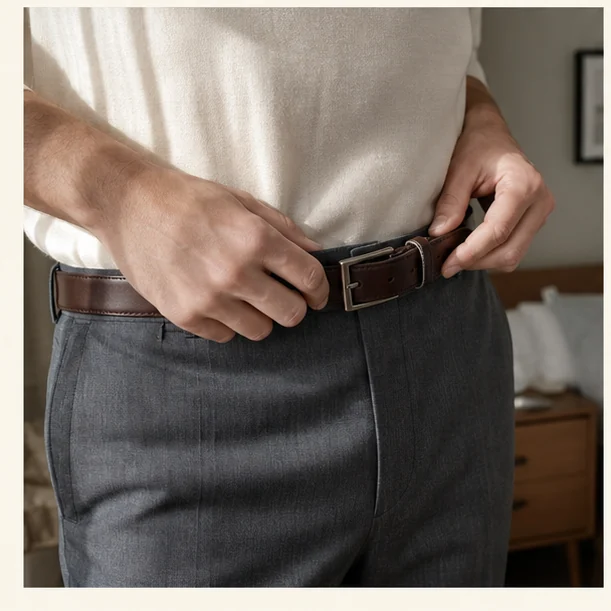
A belt bends at the same hole every morning, rubs against a desk, and carries the line of an entire outfit. Cheap surface coatings crack where better materials develop variation.
Choose material and edge construction for the outfits and climate, then size so the usual hole sits near the center. This is the filter we use throughout the guide: the product should reduce friction in the moment it is meant to serve, while creating as little new maintenance as possible.
People building a small wardrobe around repeat denim, chinos, or casual trousers.
You need a highly technical stretch belt for sport or travel security.
What to look for
The buying checklist.
Before comparing colors, launch stories, or a long feature list, make these three checks. They turn a broad category into a decision you can explain and repeat.
- 01
Correct width for the trouser loops
Check this against your own routine, space, clothing, climate, or equipment. A feature is valuable only when it changes what you can do comfortably.
- 02
Buckle scale that suits the clothing
Check this against your own routine, space, clothing, climate, or equipment. A feature is valuable only when it changes what you can do comfortably.
- 03
Edges and holes finished for repeated flexing
Check this against your own routine, space, clothing, climate, or equipment. A feature is valuable only when it changes what you can do comfortably.
Three useful ways to buy
Choose by scenario.
There is no honest single winner for every reader. These routes narrow the category around three different priorities and make the cost of each choice visible.
Best for denim
A substantial matte leather or durable woven belt balances the fabric.
The tradeoff: Thicker belts feel bulky when seated.
Use the checklist ↗Best for versatile casual wear
A restrained buckle and medium width cross outfits.
The tradeoff: Versatility can feel less distinctive.
Use the checklist ↗Best for hot weather
A woven or fabric belt offers ventilation and adjustment.
The tradeoff: It reads more casual and may fray.
Use the checklist ↗What to avoid
Three shortcuts that create regret.
- Sizing from total belt length instead of the maker method
- Buying a buckle too heavy for light trousers
- Applying random oils to coated material
Avoiding the wrong purchase is part of a buying guide’s job. If a product cannot answer the checklist above, a discount does not make it a better fit.
Living with the choice
Care is part of the value.
Hang or coil loosely, keep it dry, and use only care products suited to the specific material and finish.
Keep the receipt and care information until the return period has passed. Reassess the product after the first ordinary week—not only the exciting first day—and notice whether it has found a stable place in your routine.
Questions readers ask
Quick answers before you buy.
How much should I spend on belts that look better with age?
Set a budget after identifying the must-have criterion that changes your experience. Pay for that feature and reliable construction; skip upgrades that do not serve your scenario.
Is the most feature-rich option usually better?
No. Extra modes, pockets, materials, or accessories can add weight, maintenance, and confusion. A smaller feature set that fits the routine is often the stronger buy.
How can I compare options without hands-on testing?
Use published dimensions, materials, care instructions, compatibility information, and return terms. Treat unverified reviews as one signal, not proof, and avoid claims that cannot be traced to a reliable source.